

Can A Doctor Have Sleeve Tattoos
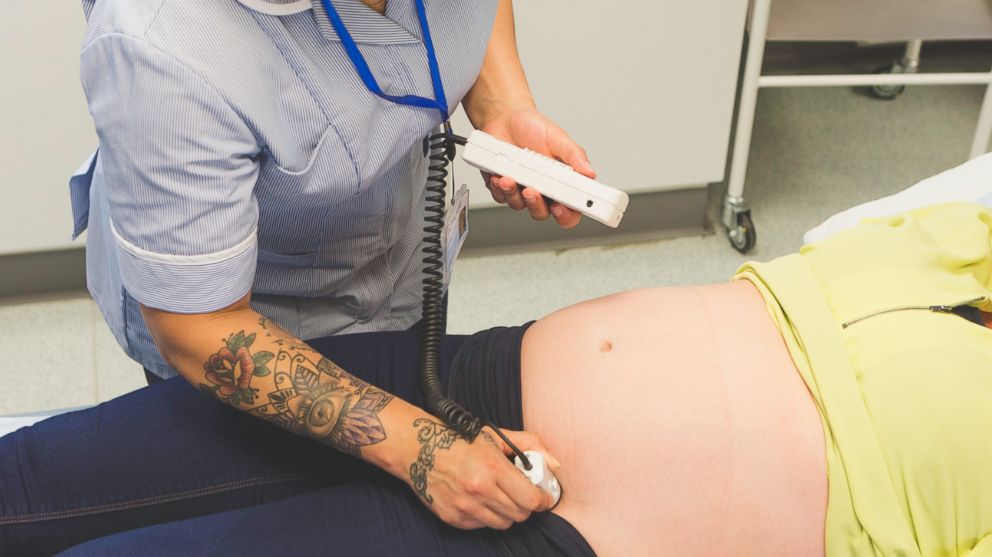
A study reveals if people prefer a more traditional looking doctor. Physician with tattoos is seen in this undated stock photo. STOCK PHOTO/Getty Images Recently, researchers found that one-half of all patients surveyed prefer their doctors to article of clothing traditional attire, such as a white coat, and this influenced an increasingly important measure: patient satisfaction. Many hospitals try to control another attribute of a caregiver's visual presentation: visible body art or piercings. However, a new study published in the Emergency Medicine Journal suggests that whether a doctor has visible tattoos or piercings doesn't seem to matter much to the patients they're treating. "We were inspired to comport this study because hospitals accept many rules around what constitutes 'professionalism,' and some of these rules are excessively stringent and outdated when compared to the full general public," Dr. Holly Stankewicz, acquaintance program director of the Allopathic Emergency Medicine residency at St.Luke'south University Health Network in Bethlehem, Pennsylvania, and co-author on the study, told ABC News. "We set out to run across in this case whether patients really cared about whether their doctor had a tattoo or a piercing, specifically if it affected how they experienced their intendance, and whether information technology negatively affected how they perceived their md." A doctor speaks to a patient in an undated stock photo. STOCK/Getty Images In this report, seven emergency room doctors chose each day to wear one of three options: (artificial) non-traditional piercings, stick-on tattoos, neither, or both for nine months while seeing patients. One physician had real "full sleeve" tattoos on both arms, and then on days he chose to have "no art or piercings," he wore a white coat to cover them. The doctors wore standard blue scrubs throughout the study menstruum. The patients -- all of whom were over the historic period of eighteen -- were so surveyed nigh their satisfaction with care, and specifically rated the doctors' competence, professionalism, empathy, approachability, trustworthiness, and reliability. The patients were not enlightened of the purpose of the study. Two of the doctors didn't enroll enough patients in the study, and another doctor dropped out due to discomfort with wearing visible body art. Only five doctors' data made information technology into the study -- males, females, residents and attending physicians. A full of 924 patients were surveyed. An undated stock photo of a doctor in a clinic. Sigrid Gombert/Cultura Exclusive/Getty Images For all five physicians, there was no deviation in how the patients perceived their competence, comfort, professionalism, or approachability, whether they had a tattoo or piercing or not. They were rated positively on all surveyed qualities 75 percent of the fourth dimension, and this showed no statistically significant difference between days they wore a tattoo or piercing compared to days where they did not. As well, the researchers found that the ratings didn't alter if the patients were over or under the age of 50, or between men and women. Of note, the patients in the study were not asked whether they had body fine art themselves, or if they disapproved of it. "It was surprising to run across that age wasn't a big factor. Some of the older patients didn't fifty-fifty find the tattoo or piercing, and if they did they would say things like, 'I like your tattoo,'" Stankewicz told ABC News. Stankewicz believes the study will aid modify views around body fine art. "At our center, I recall information technology was helpful to change perceptions in both the administration and physicians and staff in general," Stankewicz explained. Dr. Myles Spar is an internal medicine physician at the University of California, Los Angeles (UCLA) School of Medicine who runs a busy practise in Venice, California, where many patients themselves may have tattoos and piercings. Doctor with tattoos is seen in this undated stock photo. STOCK Photo/Getty Images "This is an interesting study given the breakdown of survey results by historic period of the patient. In my experience, I've noticed that much older patients may have more traditional expectations most what their doctor should look like, whereas the younger ones practise non," Spar told ABC News. "Information technology might also be helpful to know if the patients themselves had body art or not." There were some other limitations. For instance, it's unclear if the physicians behaved differently on days they wore tattoos or piercings. Known as the "Hawthorne issue," it'due south a common issue that happens in research when subjects are enlightened they are being observed. Every bit such, information technology's entirely possible that on days where the doctor wore a tattoo or piercing, they may have behaved more positively towards their patients, who and then evaluated them more than favorably. As well, given that two doctors dropped out of the study, there may be some option bias at play: The doctors that remained in the report may have been more confident around their patient advice skills compared to those that dropped out. Regardless, Spar sees the results of the written report equally encouraging. "The good affair nigh this study is that it suggests perceptions are changing. Across the board, patients are looking to their provider equally a motorcoach and advisor to work with them and less as a traditional say-so figure," Spar told ABC News. "People recognize that there are fantabulous physicians of all genders and backgrounds. At my office, nosotros recognize that and something every bit simple as having casual Fridays, where we wear jeans, makes us more accessible to patients and they are thus more probable to tell us what'due south going on with them." Dr. Amitha Kalaichandran is a pediatrics resident doctor working in the ABC News Medical Unit of measurement in New York. Exercise patients care if their doctors have tattoos or piercings?


Source: https://abcnews.go.com/Health/patients-care-doctors-tattoos-piercings/story?id=56329779
Posted by: princeinsty1936.blogspot.com
0 Response to "Can A Doctor Have Sleeve Tattoos"
Post a Comment